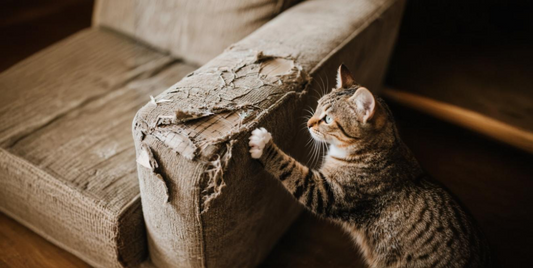
To a cat, scratching is as natural as purring or grooming. If you've ever wondered why your cat seems compelled to "destroy" the furniture, door frames, or even carpet, you're seeing the result of an ancient instinct — one that helps cats survive, communicate, and stay healthy.
Why Cats Need to Scratch
Scratching serves multiple vital functions for your cat. Understanding each one helps you appreciate why your cat will never stop scratching — and why providing appropriate outlets is so important.
Claw Maintenance
Scratching sheds dead nail layers and keeps claws sharp for climbing, defense, and hunting (even if your cat never leaves the living room). Each scratch removes the outer husk of the claw, revealing a sharper, healthier claw beneath. Without regular scratching, old nail sheaths build up and can become uncomfortable or even painful.
In the wild, sharp claws mean survival — for catching prey, escaping predators by climbing, and defending territory. Your indoor cat retains this instinct even though their biggest threat is the vacuum cleaner.
Marking Territory
Each scratch leaves behind scents from paw glands, as well as visible marks. In the wild, this tells other cats, "I live here!" These scent glands, located between your cat's paw pads, release pheromones that are undetectable to humans but clear as day to other cats.
The science of scent marking is fascinating. When your cat scratches, they're creating both a visual marker (the scratches) and a chemical marker (the pheromones). This combination makes scratching sites powerful territorial claims. That's why cats often scratch in prominent locations — they want their message seen and smelled.
Even if you have only one cat, they'll still mark territory through scratching. The instinct doesn't disappear just because there's no competition. Your cat is saying "this is mine" to the whole world — or at least to any potential visitor.
Stretching and Exercise
Scratching lets your cat stretch their spine, shoulders, and legs. Watch your cat scratch sometime — they often stretch their entire body, pulling forward with their front legs while pushing back with their hind legs. This full-body stretch keeps muscles flexible and joints healthy.
The stretching aspect is especially important after your cat wakes up from a nap. Like humans doing morning stretches, cats need to work out the stiffness. This is why you'll often see your cat head straight to a scratching surface after sleeping.
Stress Relief and Emotional Balance
Scratching releases endorphins, which help cats manage energy and feel emotionally balanced. When your cat is excited, frustrated, or overstimulated, scratching helps them regulate their emotions. It's a healthy coping mechanism, much like humans might exercise or fidget to manage stress.
According to the American Association of Feline Practitioners, scratching can be a displacement behavior during stressful situations. Notice how your cat might scratch intensely when they're conflicted (like wanting to go outside but the door is closed) or after a startle (like a loud noise).
Play and Predatory Practice
Scratching is also connected to play and hunting behaviors. When your cat "attacks" a scratching post, they're practicing the same movements they'd use to capture prey. This is especially evident in kittens, who scratch vigorously during play sessions as they develop their coordination and hunting skills.
Different Scratching Positions and What They Mean
Cats don't scratch just one way — their position and style tell you something about their needs:
- Vertical scratching (standing, reaching up): This provides maximum stretch for the spine and shoulders. Cats who prefer vertical scratching need tall, sturdy posts. This position also creates highly visible territorial marks.
- Horizontal scratching (on the floor or flat surfaces): Some cats prefer this position, especially when they want to combine scratching with kneading or when they're feeling particularly relaxed. Horizontal surfaces engage different muscle groups.
- Angled scratching (on corners or wedges): This middle-ground position appeals to many cats and allows them to scratch from multiple angles. It's one reason why furniture corners are so attractive.
- Intense, rapid scratching: Often indicates excitement, frustration, or pent-up energy. You might see this before meal times or when watching birds through the window.
- Slow, deliberate scratching: Usually about claw maintenance and marking rather than exercise or stress relief. This is your cat in maintenance mode.
The best scratchers accommodate multiple positions. That's why the Hide & Scratch cardboard scratcher is so effective — cats can scratch it horizontally, vertically, at an angle, or even from inside. There's truly no wrong way for your cat to use one, which means all their scratching needs are met in a single product.
How Scratching Changes with Age
Kittens are scratch machines! They're learning coordination, building muscle, and establishing habits. Young cats (1-3 years) tend to scratch intensely and frequently as they express their energy and continue marking their growing territory.
Adult cats (3-10 years) typically settle into consistent scratching patterns. They know what they like and where they like to do it. This is when good or bad scratching habits are most established.
Senior cats (10+ years) may scratch less vigorously due to arthritis or decreased energy, but they still need to scratch. Older cats benefit from easily accessible scratchers that don't require difficult positions. If your senior cat stops scratching, consult your vet — it could indicate pain or mobility issues.
Product Tie-In
A great solution is a scratcher that does double duty: Hide & Scratch cardboard boxes offer both satisfying scratching and a cozy hideout, making them a perfect addition to any home. There's truly no wrong way for your cat to use one.
When to See a Vet
If your cat starts scratching excessively, seems agitated, or is damaging themselves, see a veterinarian to rule out pain or anxiety. Sudden changes in scratching behavior can indicate medical issues like arthritis, skin allergies, or stress-related disorders.
Frequently Asked Questions
Is it normal for cats to scratch furniture?
Yes — scratching furniture is normal when cats don't have better alternatives. Cats aren't trying to destroy your belongings; they're just following their instincts. Your job is to redirect this natural behavior to appropriate surfaces, not to eliminate it entirely.
Do all cats scratch?
Yes, all cats have the instinct to scratch. Even declawed cats will go through the motions of scratching, though they can't actually sharpen claws. Some cats scratch more than others based on personality, age, and stress levels, but the urge is universal.
How do I know if my cat is stress-scratching?
Stress scratching is usually sudden, intense, and happens more than usual. Look for other signs like changes in appetite, hiding, excessive grooming, or litter box problems. If scratching increases after a move, new pet, or routine change, stress is likely the cause. Providing extra scratchers and calm spaces can help.
Can scratching be trained out?
Not completely, but you can redirect scratching to appropriate places with patience, praise, and the right scratcher. The goal isn't to stop scratching — it's to direct it where you want it.
Why does my cat scratch after using the litter box?
This can be marking, covering, or simply part of the post-potty routine — all are normal! Some cats scratch the walls or floor around the litter box as a way of saying "I covered that thoroughly!" even if the litter is already covering the waste.
Is it ever too late to train a cat to use scratchers?
Never! Cats of all ages can learn; it may just take longer with older cats who have established habits. Consistency and patience work at any age.
Why did my cat stop scratching their old post?
It could be too worn out, unstable, or no longer satisfying. Try a new material, location, or style. Sometimes a scratcher gets so worn down that it no longer provides the resistance cats crave.
Will declawing fix scratching?
No — and it causes pain, stress, and behavior problems. Declawed cats may still "scratch" phantom or soft surfaces, but they're missing an essential outlet. Many declawed cats develop aggression or litter box avoidance because their primary stress-relief mechanism has been removed.