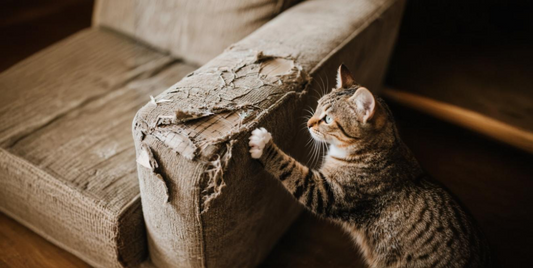
Few problems frustrate cat owners more than finding new claw marks on the corner of the couch. Scratching is a normal, healthy part of cat behavior — but it can be destructive when your cat prefers your favorite furniture. The good news: you can redirect your cat's urge to scratch with the right tools, patience, and a bit of cat psychology.
Why Do Cats Scratch?
Cats scratch for a bunch of important reasons. It's not rebellion — it's instinct. Scratching removes dead outer nail sheaths for healthy claws, helps your cat stretch muscles, relieves stress and marks territory. Their paws have scent glands, so every scratch leaves behind more than just a visible mark: it's a communication signal for other cats (even if you only have one).
Is My Cat Being Bad?
Not at all! Your cat is simply doing what cats do. Punishing or yelling at your cat for scratching the "wrong" thing doesn't work and can damage your bond. The goal is to offer irresistible alternatives and make unwanted spots less tempting.
How to Redirect Scratching Behavior
Redirecting your cat's scratching takes patience, consistency, and understanding of what makes a scratcher appealing. Here's how to set your cat up for success:
- Offer multiple scratchers in key locations. Place one where your cat already scratches, near sleeping spots, and in social areas. Most cats prefer cardboard, sisal, or carpet-covered posts/pads.
- Match their scratch style. Some cats like vertical posts; others go for horizontal pads. Try both to learn your cat's favorite angle. Hide & Scratch cardboard scratchers offer spacious, double-walled horizontal scratching surfaces that double as cozy hideaways. Their Vertical Scratcher adds a vertical scratching surface too — covering both scratching styles in one product.
- Make the right option better than the wrong one. Sprinkle catnip or silver vine, or use toys, to attract your cat to new scratchers. Reward with treats and praise for using them.
- Block access temporarily. Use double-sided sticky tape, plastic covers, or furniture shields where your cat scratches. Most lose interest after a few failed attempts if the alternative is right there.
- Keep scratchers fresh. Old cardboard gets boring. Rotate new scratchers or scratcher pads in regularly.
Positive Reinforcement Techniques That Actually Work
The most effective way to encourage your cat to use their scratcher is through positive reinforcement. When you catch your cat using the right spot, immediately reward them with a treat, gentle praise, or a play session. Your cat will quickly associate scratching the approved surface with good things happening.
Keep treats nearby during the training period so you can reward in the moment. Timing is everything — your cat needs to connect the reward with the behavior within seconds. If your cat hasn't discovered their new scratcher yet, gently guide their paws in a scratching motion on it, then reward. Most cats will naturally take over from there.
Another trick: play with your cat near the scratcher using a wand toy. When they naturally reach up or scratch during play, praise and reward. This creates a positive association without forcing anything.
Deterrent Sprays and Furniture Protectors
While you're building positive associations with scratchers, you can make furniture less appealing. Cat-safe deterrent sprays use scents like citrus or eucalyptus that most cats dislike. Spray these on furniture legs or corners your cat targets — but always test on a hidden spot first to avoid staining.
Physical barriers work even better. Furniture guards (clear plastic sheets) attach to corners and arms with pins or adhesive. Double-sided sticky tape like Sticky Paws is another effective option — cats hate the tacky feeling on their paws and quickly learn to avoid it.
Aluminum foil or plastic carpet runners (nubby side up) can also deter scratching temporarily. The key word is "temporarily" — these tools buy you time while your cat learns to prefer their scratcher. Once the habit is broken, you can usually remove the barriers.
Why Size and Stability Matter
Many cat owners wonder why their expensive scratching post goes unused. The problem is often size or stability. Cats need to fully stretch their bodies when scratching — it's not just about their claws. A post that's too short doesn't satisfy this stretching urge.
Stability is equally crucial. A wobbly post makes your cat feel unsafe. If the scratcher tips or slides when used, your cat will abandon it for something solid — like your couch. Always anchor posts to the wall or choose heavy, wide-based models.
The Hide & Scratch scratcher solves both problems: its extra-large size accommodates full-body stretching, and the sturdy cardboard construction stays put during even the most vigorous scratch sessions. Plus, cats can scratch it from any angle — horizontal, vertical, or diagonal.
What NOT to Do
Certain methods are not only ineffective but can harm your relationship with your cat or even hurt them:
- Never declaw. Declawing isn't a simple nail trim — it's the amputation of the last bone in each toe. It's painful, can cause lifelong complications, and often leads to biting, litter box avoidance, and chronic pain. It's banned in many countries and increasingly in U.S. cities. There's simply no good reason to do it when humane alternatives exist.
- Don't punish or yell. Cats don't understand punishment the way dogs might. Yelling, hitting, or using spray bottles creates fear and stress, not learning. Your cat will just scratch when you're not looking.
- Skip the claw caps unless absolutely necessary. While vinyl nail caps are less invasive than declawing, they still prevent natural scratching behavior and require regular replacement. Try redirection first.
- Don't give up too soon. Behavior change takes time. Some cats adapt in days; others need weeks. Consistency is key.
Don't Declaw!
Declawing is cruel — it's not just a nail trim, but removing part of each toe. It often leads to behavioral and medical problems. With consistency, every cat can be trained to use scratchers instead of your couch.
When to See a Vet
If your cat's scratching suddenly intensifies, is accompanied by crying, or they seem unable to stop, consult a veterinarian. Excessive scratching can signal anxiety, pain, or a medical issue. Similarly, if your cat suddenly stops scratching entirely, it could indicate arthritis or discomfort.
Frequently Asked Questions
Why won't my cat use their scratching post?
It may be too unstable, too short, or the wrong material. Try taller, sturdier posts and horizontal options. Place them where your cat actually spends time.
Will my cat ever stop scratching furniture?
Yes! With consistent redirection, proper scratchers, and patience, most cats learn to use approved scratching surfaces exclusively. It typically takes 2-6 weeks of consistent training. The key is making the scratcher more rewarding than the furniture.
How long does it take to redirect my cat's scratching?
Most cats show improvement within 1-2 weeks and fully redirect within 4-6 weeks. Younger cats tend to adapt faster, while older cats with established habits may take longer. Stay consistent and patient — every cat can learn.
What if my cat ignores the scratcher completely?
Try different materials (sisal vs. cardboard vs. carpet), different angles (horizontal vs. vertical), and different locations. Sprinkle fresh catnip or play near the scratcher to create positive associations. Some cats prefer enclosed spaces, others want to scratch in high-traffic areas where they can be seen.
Is it okay to trim my cat's claws?
Yes! Regular nail trims keep claws healthy and minimize damage to furniture. Trim every 2-4 weeks, removing just the sharp tip. If you're nervous, ask your vet or a groomer to show you the first time.
How many scratchers does a cat need?
One per cat, plus one extra in multi-cat homes is ideal. Place scratchers in different rooms — especially near favorite napping spots and high-traffic areas.
How can I protect leather or expensive furniture?
Cover with blankets when not in use, use protective pads, or block access until your cat is reliably using their scratchers. Leather is particularly appealing to cats because it's easy to grip.
Will spraying with water stop scratching?
No. This damages trust and rarely works; redirect instead! Water bottles teach your cat to fear you, not to avoid scratching.