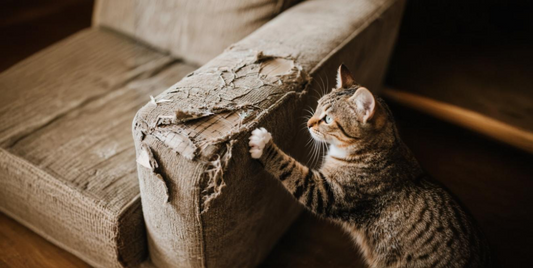
Catnip can transform even the laziest, most aloof cat into a playful kitten — rolling around like they've lost their mind, rubbing their face on everything, and zooming around the house with wild energy. But what exactly is catnip, and why does it have such a dramatic, almost euphoric effect on your cat?
Understanding the science behind this feline obsession can help you use catnip safely and effectively to enrich your cat's environment, reduce stress, and encourage positive behaviors like using scratching posts.
The Science Behind the Catnip High
Catnip (Nepeta cataria) is a perennial herb in the mint family that's been fascinating cat owners for centuries. The secret to its power lies in a volatile oil called nepetalactone, which is released when the plant's leaves and stems are crushed or bruised.
When cats smell nepetalactone, it binds to receptors in their nasal tissue and stimulates sensory neurons that lead directly to the olfactory bulb, then to the amygdala and hypothalamus — the parts of the brain that regulate emotional responses, behavioral patterns, and the hypothalamic-pituitary-adrenal axis.
The result is essentially a temporary, harmless "high" that affects your cat's nervous system. Your cat experiences something similar to euphoria or mild intoxication, though comparing it to human drug experiences isn't quite accurate since the neurological pathways are different.
According to research published by the American Chemical Society, the effect is completely temporary and harmless. The catnip "high" typically lasts between 5 and 15 minutes, after which your cat becomes temporarily immune to catnip's effects. They'll need about 30 minutes to an hour — sometimes up to two hours — before their sensitivity resets and they can respond to catnip again.
Interestingly, recent research has discovered that catnip may also serve as a natural insect repellent. The same compounds that trigger euphoria in cats are highly effective at repelling mosquitoes, flies, and other insects — potentially explaining why cats rub catnip on themselves so vigorously.
Why Some Cats Don't React to Catnip
Here's a surprising fact that many cat owners don't know: only about 50-70% of cats are affected by catnip at all. Sensitivity to catnip is hereditary — it's an autosomal dominant trait, meaning a cat only needs to inherit one copy of the "catnip gene" from either parent to be a responder.
If your cat doesn't react to catnip, they're not broken or abnormal. They simply didn't inherit the genetic sensitivity. The trait appears across all cat breeds, though some lines seem to have higher percentages of responders than others.
Age also plays a role. Kittens under three to six months old typically don't respond to catnip at all, regardless of genetics. The sensitivity develops as cats sexually mature. Very elderly cats may also lose some of their sensitivity to catnip as their senses dull with age.
Fascinatingly, domestic cats aren't the only felines affected by catnip. Big cats like lions, tigers, leopards, and jaguars can also react to catnip, though their responses vary significantly. Some big cats show the same rolling and rubbing behavior, while others are completely indifferent.
Common Catnip Behaviors to Expect
Every cat reacts differently to catnip, but certain behaviors are extremely common among responders:
- Rolling and rubbing vigorously on the ground or against objects
- Excessive vocalization — meowing, trilling, or purring loudly
- Drooling or excessive salivation (perfectly normal, though messy)
- Hyperactivity — running, jumping, and playing with manic energy
- Aggressive play behavior with toys (usually harmless and not directed at people)
- Head shaking and chin rubbing
- Zoning out or becoming very mellow and relaxed
- Kicking with back legs (the famous "bunny kick")
Interestingly, about 30% of catnip-sensitive cats become relaxed and mellow instead of hyperactive. This sedative effect is less common but equally normal. The specific reaction depends on your individual cat's neurological makeup and personality.
The behavioral response is usually stronger when cats smell catnip rather than eat it. Ingesting catnip tends to have a more sedative effect, while smelling it triggers the hyperactive "high."
Using Catnip Safely and Effectively
The good news is that catnip is completely non-addictive and non-toxic to cats. However, there are smart, strategic ways to maximize its benefits:
- Use sparingly — offering catnip too frequently can decrease its effectiveness over time. Once or twice a week keeps it special.
- Store dried catnip in an airtight container in a cool, dark place to preserve potency. Exposure to air and light degrades nepetalactone.
- Sprinkle catnip on scratching posts or new toys to encourage your cat to use them
- Try fresh catnip plants for a stronger, more potent reaction than dried catnip
- Use catnip strategically during stressful times like vet visits, moving, or introducing new pets
- Refresh old toys by adding a pinch of fresh catnip to renew your cat's interest
- Create catnip toys by stuffing fabric with dried catnip and sewing it shut
You can refresh your cat's favorite toys and encourage healthy scratching by sprinkling a bit of catnip on their cardboard scratcher. Many cats love combining the satisfying physical sensation of scratching with the euphoric catnip experience. The corrugated cardboard texture is perfect for catching and holding dried catnip.
While catnip is safe, monitor your cat during their catnip session, especially if they're prone to aggressive play. Some cats can become overstimulated and might accidentally scratch or bite during intense play. This isn't true aggression — they're just very, very excited.
Catnip Alternatives Worth Trying
If your cat is one of the 30-50% who don't react to catnip, don't worry — there are several alternative plants that might trigger similar responses:
- Silver vine (Actinidia polygama) — A climbing plant from Asia that affects 80% or more of cats, including many non-responders to catnip. It contains actinidine and dihydroactinidiolide.
- Valerian root (Valeriana officinalis) — Produces a similar euphoric effect through different chemical compounds. Some cats prefer it to catnip.
- Tatarian honeysuckle wood (Lonicera tatarica) — Contains compounds that stimulate many cats. Often sold as wood chips or toys.
- Cat thyme (Teucrium marum) — Another plant in the mint family that affects some cats who don't respond to traditional catnip.
Each plant contains different active compounds, so cats who don't react to one might respond enthusiastically to another. Some pet stores now sell variety packs with multiple types so you can discover your cat's preference.
Frequently Asked Questions
Can cats overdose on catnip?
No, cats cannot overdose on catnip. It's completely safe and non-toxic. If a cat ingests large amounts, they might experience mild digestive upset like vomiting or diarrhea, but it's not dangerous. Most cats self-regulate and stop when they've had enough.
How often can I give my cat catnip?
You can offer catnip a few times a week without problems. However, daily exposure might reduce its effectiveness over time as your cat becomes desensitized. Spacing it out to once or twice weekly keeps the experience special and maintains your cat's full sensitivity.
Why does my cat become aggressive on catnip?
Most "aggressive" behavior on catnip is actually intense playful energy — batting, pouncing, wrestling with toys, and play fighting. This is normal and not true aggression. However, if your cat seems genuinely aggressive toward people or other pets, remove the catnip and provide it only during supervised solo play.
Does catnip lose potency over time?
Yes, nepetalactone degrades when exposed to air, light, and heat. Store dried catnip in an airtight container in a cool, dark place — your freezer works great for long-term storage. Fresh catnip from a living plant is always more potent than dried, and homegrown plants offer the strongest reaction possible.
Is catnip safe for kittens?
Catnip is completely safe for kittens of any age, but most won't react until they're 3-6 months old when they reach sexual maturity. There's no harm in offering it earlier — they'll simply ignore it until their sensitivity develops naturally.
Can humans use catnip?
Ironically, while catnip makes cats hyperactive, it has the opposite effect on humans. Catnip tea has been used for centuries as a mild sedative and digestive aid. It's safe for human consumption but won't produce any kind of "high."